

Eviction Process In Vermont
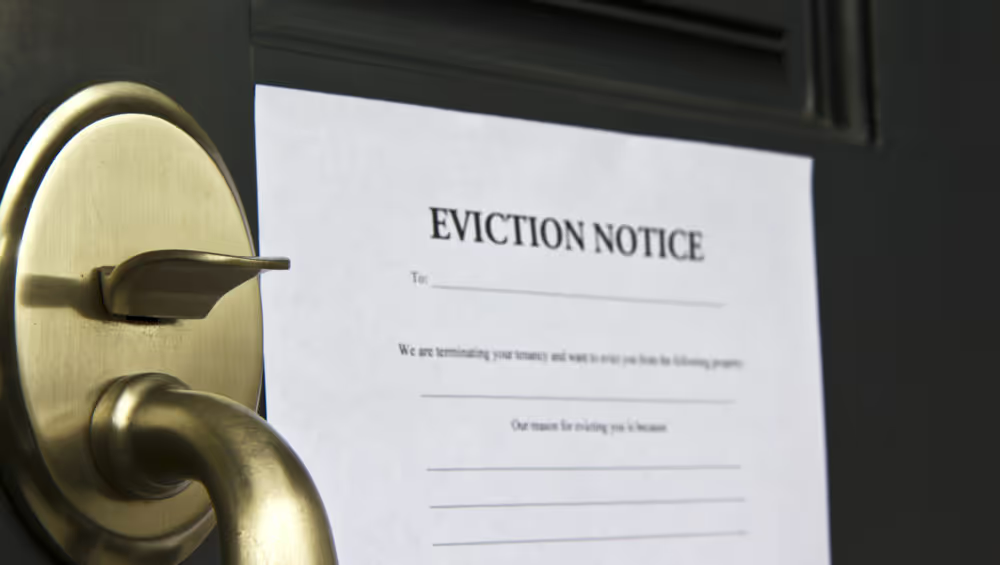
Evicting a tenant in Vermont means following ejectment action (eviction complaint) in Civil Division of the Superior Court exactly, start to finish. Skipping a step, whether it's the notice period, how the tenant is served, or the lockout procedure, can restart the clock or expose a management company to liability. This guide walks through each step with the statute or court rule behind it.
Everything below is sourced to Vermont's own statutes and court self-help pages. Specific deadlines and dollar figures do change, so confirm the current text before you rely on a date in a live case.
Overview Of The Eviction Process
Vermont residential evictions are ejectment actions filed in the Civil Division of the Superior Court in the county where the rental property is located, governed by 9 V.S.A. chapter 137 (notice) and the Rules of Civil Procedure for the ejectment action itself.
- The Civil Division of the Superior Court in the county where the property is located hears residential eviction cases, sometimes styled as a 'complaint for ejectment' or 'action for ejectment.' (Vermont Judiciary eviction process overview)
- A notice to terminate a tenancy is insufficient to support a judgment of eviction unless the ejectment proceeding is commenced no later than 60 days from the termination date stated in the notice. (9 V.S.A. § 4467(k))
Lawful Grounds For Eviction
Grounds include nonpayment of rent, breach of a material lease term, criminal/drug activity or violence threatening other residents' safety, and no-cause termination (subject to longer notice for longer tenancies).
- A landlord may terminate for nonpayment of rent, for failure to comply with a material term of the rental agreement or statutory obligations, for criminal activity, illegal drug activity, or acts of violence threatening the health or safety of other residents, or for no cause at all (subject to the applicable notice period). (9 V.S.A. § 4467(a)-(c))
Notice Requirements
Vermont notice periods range from 14 days (nonpayment; criminal/drug/violence grounds) to 30 days (material breach; no-cause under a written lease of 2 years or less) to 60-90 days (no-cause without a written lease, or under a written lease of more than 2 years).
- For nonpayment of rent, the landlord must give actual notice of the termination date, at least 14 days after the date of the notice; the tenancy does not terminate if the tenant pays or tenders rent due through the end of the rental period in which payment is made. (9 V.S.A. § 4467(a))
- For failure to comply with a material term of the rental agreement, the landlord must give at least 30 days' actual notice; for criminal activity, illegal drug activity, or acts of violence threatening the health or safety of other residents, only 14 days' actual notice is required. (9 V.S.A. § 4467(b))
- For no-cause termination without a written rental agreement, monthly tenants who have resided 2 years or less require at least 60 days' notice, and those who have resided more than 2 years require at least 90 days' notice; weekly tenants require at least 21 days' notice. (9 V.S.A. § 4467(c))
- For no-cause termination under a written rental agreement, notice must be at least 30 days before the end of the lease term for tenancies of 2 years or less, and at least 60 days for tenancies of more than 2 years; a written week-to-week agreement requires at least 7 days' notice. (9 V.S.A. § 4467(e))
Filing The Case
The landlord files the eviction complaint after the notice's termination date passes, and must include a copy of the lease, the written notice, and a federal CARES Act compliance declaration.
- The landlord must wait until the termination date stated in the notice has passed, then file the ejectment/eviction complaint within 60 days afterward; required filing documents include the complaint, a copy of the lease, the written notice, and a Declaration of Compliance with the CARES Act. (Vermont Judiciary eviction filing requirements)
Serving The Tenant
A sheriff serves the tenant with the complaint, summons, and response paperwork; the landlord arranges and pays for sheriff service.
- A sheriff must serve the tenant with the eviction complaint, summons, CARES Act Declaration form, a blank answer form, and a Notice of Appearance; the landlord arranges and pays for the sheriff's service, and the sheriff files a Return of Service documenting what was served. (Vermont Judiciary eviction process, service of process)
The Tenant's Response
The tenant generally has 21 days after being served with the eviction complaint to file a written answer, which may include affirmative defenses and counterclaims.
- Tenants generally have 21 days after being served with the eviction complaint to file a written answer, which may raise affirmative defenses and counterclaims. (Vermont Judiciary eviction process, tenant answer deadline)
- A landlord's acceptance of full or partial rent payment after termination of the tenancy for reasons other than nonpayment, or at any time during the ejectment action, does not result in dismissal of the action or waive the landlord's remedies to proceed. (9 V.S.A. § 4467(j))
Hearing And Judgment
At trial the judge decides whether the tenant may be evicted and whether money is owed, then issues a written decision.
- At trial, the judge determines whether the tenant can be evicted, whether money is owed, and resolves any other issues raised, providing a written decision to the parties afterward. (Vermont Judiciary eviction process, trial and judgment)
The Writ And Lockout
A Writ of Possession is issued after judgment for the landlord; tenants generally have 14 days to vacate after being served (7 days if evicted for missing rent-escrow payments), and remaining belongings may be disposed of afterward.
- If eviction is ordered, a Writ of Possession is issued; tenants have 14 days to vacate after being served with the writ (7 days if the eviction is for missing rent-escrow payments), and the writ remains effective for 60 days. (12 V.S.A. § 4854)
- A landlord may dispose of a tenant's remaining belongings on the later of 15 days after the writ is served, or when the landlord legally retakes possession. (12 V.S.A. § 4854a)
Prohibited Practices
Self-help removal, lockouts, and utility shutoffs without a court order are prohibited.
- A landlord may not remove a tenant from a property without a court order, and may not change the locks, shut off utilities, or remove the tenant's belongings without a court order. (9 V.S.A. § 4463)
Eviction is the last step in a relationship that's already gone wrong. See our guide to Vermont property management laws and regulations for the licensing, disclosure, and trust-account rules that apply before it gets to this point.
Doing It By The Book
Self-help evictions, changing locks, removing doors, shutting off utilities, are illegal in every state and expose a management company to real liability regardless of how clear the nonpayment is. The court process exists because it's the only lawful way to remove a tenant, and skipping a step (a defective notice, bad service) is the single most common reason a case gets dismissed and restarted from day one.
This guide is a starting point for professional managers, not legal advice. For a specific case, a contested filing, or anything unusual, work with a Vermont attorney, and confirm the current text of any rule cited above with Civil Division of the Superior Court or the Vermont legislature.
Sources
Every fact above is drawn from one of the official sources below.
- Vermont Judiciary eviction process overview, Vermont Judiciary (vtcourts.gov)
- 9 V.S.A. § 4467(k), Vermont General Assembly (Vermont Statutes Online)
Frequently asked questions
Vermont residential evictions are ejectment actions filed in the Civil Division of the Superior Court in the county where the rental property is located, governed by 9 V.S.A. chapter 137 (notice) and the Rules of Civil Procedure for the ejectment action itself.
Vermont notice periods range from 14 days (nonpayment; criminal/drug/violence grounds) to 30 days (material breach; no-cause under a written lease of 2 years or less) to 60-90 days (no-cause without a written lease, or under a written lease of more than 2 years).
Self-help removal, lockouts, and utility shutoffs without a court order are prohibited.
Managing rentals through an eviction?
An eviction lands on your books as well as your docket: the security deposit disposition, prorated or written-off rent, and the owner statement it all flows into. If you would rather have the accounting side handled while you handle the property, see how we keep trust accounts clean through move-outs, or find your state in our eviction process guides.