
Eviction Process In South Carolina
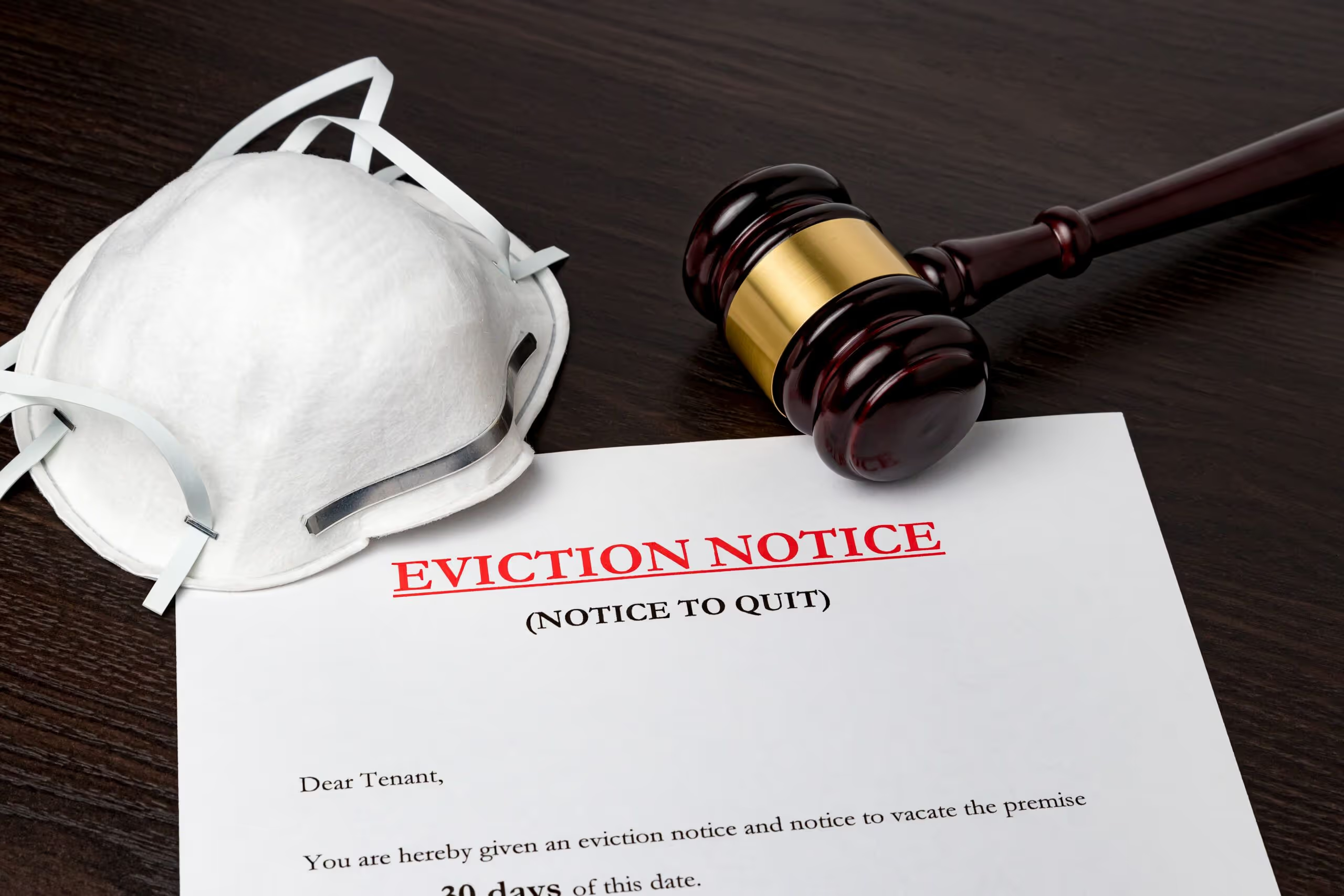
Evicting a tenant in South Carolina means following ejectment action (Rule to Vacate or Show Cause) in Magistrate's Court exactly, start to finish. Skipping a step, whether it's the notice period, how the tenant is served, or the lockout procedure, can restart the clock or expose a management company to liability. This guide walks through each step with the statute or court rule behind it.
Everything below is sourced to South Carolina's own statutes and court self-help pages. Specific deadlines and dollar figures do change, so confirm the current text before you rely on a date in a live case.
Overview Of The Eviction Process
South Carolina evictions proceed as an ejectment action in Magistrate's Court under S.C. Code Title 27, Chapter 37 (procedure), read together with the Residential Landlord and Tenant Act, Title 27, Chapter 40 (substantive notice and habitability rules).
- The tenant may be ejected upon application of the landlord or agent when the tenant fails or refuses to pay rent when due or demanded, the term of tenancy has ended, or the terms or conditions of the lease have been violated. (S.C. Code Ann. § 27-37-10)
- The action is governed procedurally by S.C. Code Ann. §§ 27-37-10 through 27-37-160 (ejectment) and substantively by the Residential Landlord and Tenant Act, Title 27, Chapter 40. (S.C. Code Ann. Title 27, Chs. 37 & 40)
Lawful Grounds For Eviction
Nonpayment of rent, expiration of the lease term, and violation of lease terms or conditions are the statutory grounds for ejectment.
- A tenant may be ejected when the tenant fails or refuses to pay rent when due or demanded, when the term of tenancy or occupancy has ended, or when the terms or conditions of the lease have been violated. (S.C. Code Ann. § 27-37-10)
Notice Requirements
South Carolina uses a 5-day pay-or-quit notice for nonpayment, a 14-day cure notice for other lease breaches, and 30/7-day notices to end month-to-month and week-to-week tenancies.
- For nonpayment, the landlord may terminate if rent is unpaid when due and the tenant fails to pay within five days from the date due; a lease clause with the required statutory language satisfies the written-notice requirement without a separate notice. (S.C. Code Ann. § 27-40-710(B))
- For breaches other than nonpayment, the landlord must give written notice specifying the violation and allow 14 days to remedy before termination is effective. (S.C. Code Ann. § 27-40-710(A))
- For conditions materially affecting health and safety, the tenant must comply as promptly as an emergency requires or within 14 days after written notice. (S.C. Code Ann. § 27-40-720)
- A month-to-month tenancy may be terminated by either party with written notice at least 30 days before the termination date; a week-to-week tenancy requires at least 7 days' notice. (S.C. Code Ann. § 27-40-770(a)-(b))
Filing The Case
The landlord (or agent/attorney) applies to the Magistrate's Court for a Rule to Vacate or Show Cause using the Judicial Branch's standard ejectment forms.
- Upon application by the landlord, agent, or attorney, the magistrate issues a written rule requiring the tenant to vacate or show cause why they should not be ejected, appearing before the magistrate within 10 days after service of the rule. (S.C. Code Ann. § 27-37-20)
- The South Carolina Judicial Branch publishes standard ejectment forms, including SCCA 732 (Application for Ejectment) and SCCA 733A (Rule to Vacate or Show Cause), for use in Magistrate's Court. (SCCA Form 732; SCCA Form 733A)
Serving The Tenant
The rule is served the same way as a civil summons, with posting-plus-mail permitted after failed attempts at abandoned or hard-to-serve premises.
- Standard service of the rule is made in the same manner as service of a summons in civil actions. (S.C. Code Ann. § 27-37-30)
- If premises appear abandoned, the rule may be served by posting on the most conspicuous part of the premises; after failed personal-service attempts (two attempts, separated by set time intervals and documented by affidavit), posting plus mailing is permitted. (S.C. Code Ann. § 27-37-30)
The Tenant's Response
The tenant must appear and show cause within 10 days of service; the Landlord and Tenant Act preserves habitability and retaliation defenses.
- If the tenant fails to appear and show cause within the 10 days provided in the rule, the magistrate issues a warrant of ejectment. (S.C. Code Ann. § 27-37-40)
- A tenant asserting a retaliation defense (e.g., after reporting code violations) must notify the landlord in writing within 10 days after service of the Rule to Vacate or Show Cause. (S.C. Code Ann. § 27-40-910)
- A landlord's breach of the duty to maintain the premises in a fit and habitable condition can be raised as a defense to a possession or rent claim. (S.C. Code Ann. §§ 27-40-440, 27-40-610)
Hearing And Judgment
The magistrate hears and determines the case promptly (jury trial available on demand); a judgment for the landlord triggers issuance of the writ within 5 days.
- The magistrate must forthwith hear and determine the ejectment case, with a jury trial available upon demand. (S.C. Code Ann. § 27-37-60)
- If the verdict is for the landlord, the magistrate must issue a writ of ejectment within 5 days. (S.C. Code Ann. § 27-37-100)
- Either party may appeal an ejectment judgment; an appeal bond must be filed within 5 days or the appeal is dismissed and the appeal does not automatically stay ejectment. (S.C. Code Ann. §§ 27-37-120, 27-37-130)
The Writ And Lockout
The writ of ejectment is executed by a constable, special constable, or the sheriff, who must give occupants 24 hours' notice to vacate voluntarily before forced entry.
- The tenant is ejected by a regular or special constable, or by the sheriff of the county. (S.C. Code Ann. § 27-37-40)
- The officer executing the writ presents occupants with a copy of the writ and gives them 24 hours to vacate voluntarily before entering; only a deputy sheriff (not a constable) may use force to enter. (S.C. Code Ann. § 27-37-160)
- Personal property removed to a public street must be removed by appropriate municipal or county officials after 48 hours, excluding Saturdays, Sundays, and holidays. (S.C. Code Ann. § 27-40-710(D))
Prohibited Practices
Self-help lockouts and utility shutoffs are barred; tenants may recover possession or terminate the lease plus damages and attorney's fees.
- A landlord may not recover or take possession of the dwelling unit by self-help, including willful diminution of essential services, except in case of abandonment, surrender, or termination as permitted by the chapter. (S.C. Code Ann. § 27-40-760)
- For unlawful removal, exclusion, or willful diminution of essential services, the tenant may recover possession or terminate the rental agreement and recover the greater of three months' periodic rent or twice actual damages, plus reasonable attorney's fees. (S.C. Code Ann. § 27-40-660)
Eviction is the last step in a relationship that's already gone wrong. See our guide to South Carolina property management laws and regulations for the licensing, disclosure, and trust-account rules that apply before it gets to this point.
Doing It By The Book
Self-help evictions, changing locks, removing doors, shutting off utilities, are illegal in every state and expose a management company to real liability regardless of how clear the nonpayment is. The court process exists because it's the only lawful way to remove a tenant, and skipping a step (a defective notice, bad service) is the single most common reason a case gets dismissed and restarted from day one.
This guide is a starting point for professional managers, not legal advice. For a specific case, a contested filing, or anything unusual, work with a South Carolina attorney, and confirm the current text of any rule cited above with Magistrate's Court or the South Carolina legislature.
Sources
Every fact above is drawn from one of the official sources below.
- S.C. Code Ann. § 27-37-10, South Carolina Code of Laws (SC Legislature Online)
- S.C. Code Ann. Title 27, Chs. 37 & 40, South Carolina Code of Laws (SC Legislature Online)
- SCCA Form 732; SCCA Form 733A, South Carolina Judicial Branch (sccourts.org)
Frequently asked questions
South Carolina evictions proceed as an ejectment action in Magistrate's Court under S.C. Code Title 27, Chapter 37 (procedure), read together with the Residential Landlord and Tenant Act, Title 27, Chapter 40 (substantive notice and habitability rules).
South Carolina uses a 5-day pay-or-quit notice for nonpayment, a 14-day cure notice for other lease breaches, and 30/7-day notices to end month-to-month and week-to-week tenancies.
Self-help lockouts and utility shutoffs are barred; tenants may recover possession or terminate the lease plus damages and attorney's fees.
Managing rentals through an eviction?
An eviction lands on your books as well as your docket: the security deposit disposition, prorated or written-off rent, and the owner statement it all flows into. If you would rather have the accounting side handled while you handle the property, see how we keep trust accounts clean through move-outs, or find your state in our eviction process guides.