

Eviction Process In New Hampshire
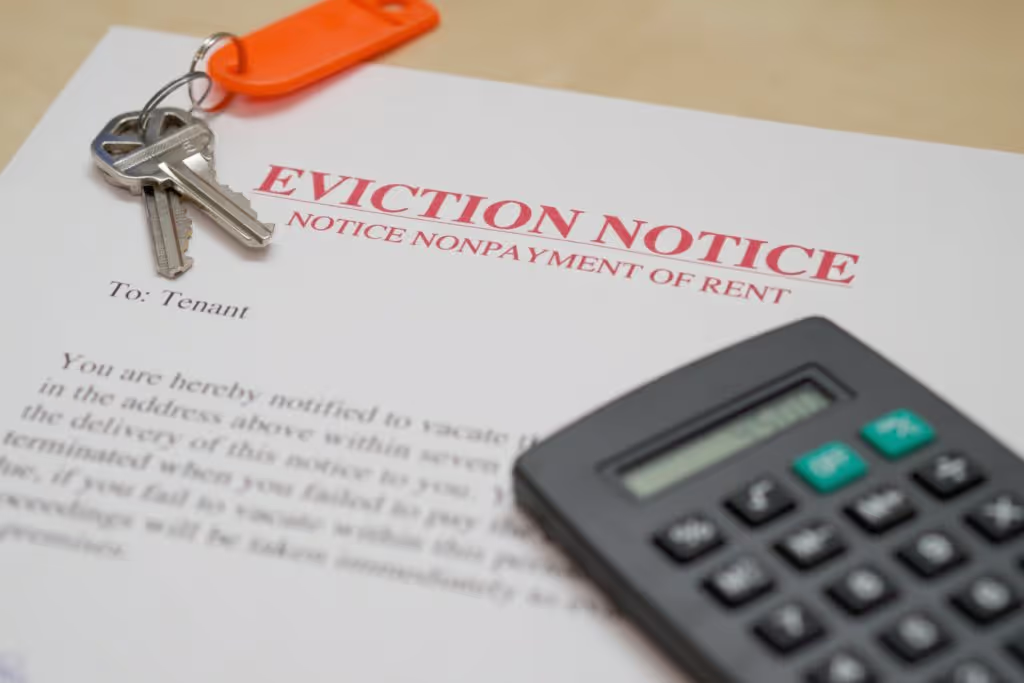
Evicting a tenant in New Hampshire means following Landlord and Tenant Writ in Circuit Court, District Division exactly, start to finish. Skipping a step, whether it's the notice period, how the tenant is served, or the lockout procedure, can restart the clock or expose a management company to liability. This guide walks through each step with the statute or court rule behind it.
Everything below is sourced to New Hampshire's own statutes and court self-help pages. Specific deadlines and dollar figures do change, so confirm the current text before you rely on a date in a live case.
Overview Of The Eviction Process
New Hampshire's summary eviction action is called a Landlord and Tenant Writ, governed by RSA 540 (possessory actions against tenants) and heard in the District Division of the Circuit Court for the county where the property sits.
- Eviction using a Landlord and Tenant Writ applies to most residential and non-residential tenancies and is governed by RSA 540. (RSA 540:12, RSA 540:13)
- The official case-initiating form is the Landlord and Tenant Writ (form NHJB-2333-DP), filed with the Circuit Court District Division for the county where the rental property is located. (District Division Rule 5.1 et seq.)
- Landlord-tenant prohibited practices (self-help eviction, security deposits) are governed separately under RSA Chapter 540-A. (RSA 540-A:1 through 540-A:8)
Lawful Grounds For Eviction
RSA 540:2 limits termination of a residential tenancy to nine enumerated grounds, including nonpayment, property damage, lease violations, behavior affecting health/safety, and (starting July 1, 2026) non-renewal of longer-term leases.
- A landlord may terminate for "neglect or refusal to pay rent due and in arrears, upon demand." (RSA 540:2, II(a))
- A landlord may terminate for "failure of the tenant to comply with a material term of the lease." (RSA 540:2, II(c))
- A landlord may terminate for "other good cause," which functions as New Hampshire's catch-all/no-cause ground. (RSA 540:2, II(e))
- Effective July 1, 2026, a new ground allows termination for expiration of a lease term of 12 months or more where the landlord gave at least 60 days' written notice that the lease will not be renewed; the possessory action must be filed within 6 months of the termination date. (RSA 540:2, II(i) (effective July 1, 2026))
Notice Requirements
RSA 540:3 sets a general 30-day notice period for residential terminations, shortened to 7 days for specific grounds, plus a rent-increase notice rule in RSA 540:2.
- For residential tenants, "30 days' notice shall be sufficient in all cases" of termination not otherwise specified. (RSA 540:3)
- A 7-day notice period applies for the grounds listed in RSA 540:2, II(a), (b), (d), or (h), nonpayment, substantial property damage, health/safety-threatening behavior, and domestic-violence-related terminations. (RSA 540:3)
- The eviction notice must "state with specificity the reason for the eviction," and if based on nonpayment, must inform the tenant of the right to avoid eviction by paying arrearages and liquidated damages under RSA 540:9. (RSA 540:3)
- A rent increase requires written notice of the amount and effective date at least 30 days before the increase takes effect. (RSA 540:2, IV)
Filing The Case
The landlord files a Landlord and Tenant Writ with the Circuit Court District Division clerk for the county where the property is located.
- The Landlord and Tenant Writ (form NHJB-2333-DP) must be obtained from and filed with the District Court Clerk's Office in the county where the property is located. (District Division Rule 5.2)
Serving The Tenant
The eviction notice may be served by any person, but the court writ itself must be served by the sheriff, with a 7-day return.
- A demand for rent or eviction notice "may be served by any person and may be served upon the tenant personally or left at his or her last and usual place of abode." (RSA 540:5)
- Proof of service requires a true and attested copy of the notice with an affidavit of service, which need not be sworn under oath. (RSA 540:5)
- The writ of summons is served by the sheriff and is returnable 7 days from the date of service. (RSA 540:13)
The Tenant's Response
The tenant responds by filing an appearance; failure to do so results in default, and specific statutory defenses (payment, retaliation) are available.
- If the tenant fails to file an appearance or appear at the hearing, the court mails a notice of default at least 3 days before a writ of possession issues. (RSA 540:13)
- A possessory action based solely on nonpayment of rent must be dismissed if the tenant pays all rent due plus other charges before the hearing on the merits and the landlord submits a receipt to the court. (RSA 540:9)
- Retaliation is a statutory defense to a possessory action. (RSA 540:13-a)
Hearing And Judgment
If the tenant appears, a hearing is scheduled within 10 days; judgment for the prevailing landlord includes possession, costs, and issuance of a writ of possession.
- If the tenant files an appearance, a hearing must be scheduled to occur within 10 days after the filing, with notice mailed no fewer than 6 days before the hearing. (RSA 540:13)
- Both parties have a right to engage in discovery before the hearing on the merits, within the timeframe set by the District Court Rules for eviction actions. (RSA 540:13)
- If judgment is for the plaintiff (by default or after trial), "judgment shall be rendered that the plaintiff recover possession of the demanded premises and costs, and a writ of possession shall issue." (RSA 540:14)
- Where the tenant successfully proves retaliation, the court may award damages of not more than 3 months' rent. (RSA 540:14 (citing RSA 540:13-a))
The Writ And Lockout
A writ of possession issues after judgment; on default it cannot issue until at least 3 days after a mailed default notice, and it is enforced by the sheriff.
- On default, the court mails a notice of default to the address on the summons at least 3 days before the writ of possession issues. (RSA 540:13)
- Where judgment applies to only one tenant in a multi-person household, the writ of possession removes only that individual, and other occupants may remain. (RSA 540:14)
Prohibited Practices
RSA 540-A bans self-help evictions, unauthorized entry, and utility shutoffs, with statutory minimum damages for violations.
- RSA 540-A:2 prohibits a landlord from interfering with a tenant's quiet enjoyment or attempting to circumvent the legal eviction process. (RSA 540-A:2)
- Specific prohibited acts include willfully seizing or denying a tenant access to their property other than by proper judicial process, willfully entering the premises without prior consent (except for emergency repairs), and turning off the tenant's utilities. (RSA 540-A:3)
- Landlord damages for an unlawful dispossession or lockout of a tenant, where the landlord has re-let the premises or has a new tenant in place, must be not less than $3,000. (RSA 540-A:4)
- If an action under RSA 540-A:3 is found frivolous or brought solely for harassment, the plaintiff must pay the defendant's costs, including reasonable attorney's fees. (RSA 540-A:4)
Recent Changes Worth Tracking
- A new nonrenewal ground for leases of 12 months or more takes effect July 1, 2026, requiring at least 60 days' written notice that the lease will not be renewed and requiring the possessory action to be filed within 6 months of the termination date, subject to anti-retaliation protections. (RSA 540:2, II(i), effective July 1, 2026)
Eviction is the last step in a relationship that's already gone wrong. See our guide to New Hampshire property management laws and regulations for the licensing, disclosure, and trust-account rules that apply before it gets to this point.
Doing It By The Book
Self-help evictions, changing locks, removing doors, shutting off utilities, are illegal in every state and expose a management company to real liability regardless of how clear the nonpayment is. The court process exists because it's the only lawful way to remove a tenant, and skipping a step (a defective notice, bad service) is the single most common reason a case gets dismissed and restarted from day one.
This guide is a starting point for professional managers, not legal advice. For a specific case, a contested filing, or anything unusual, work with a New Hampshire attorney, and confirm the current text of any rule cited above with Circuit Court, District Division or the New Hampshire legislature.
Sources
Every fact above is drawn from one of the official sources below.
- RSA 540:12, RSA 540:13, New Hampshire General Court, RSA Chapter 540 index
- District Division Rule 5.1 et seq., New Hampshire Judicial Branch, Landlord/Tenant - District Division
- RSA 540-A:1 through 540-A:8, New Hampshire General Court, RSA Chapter 540-A index
- RSA 540:2, II(a), New Hampshire General Court, RSA 540:2
- RSA 540:3, New Hampshire General Court, RSA 540:3
- RSA 540:5, New Hampshire General Court, RSA 540:5
- RSA 540:13, New Hampshire General Court, RSA 540:13
- RSA 540:9, New Hampshire General Court, RSA 540:9
- RSA 540:13-a, New Hampshire General Court, RSA 540:13-a
- RSA 540:14, New Hampshire General Court, RSA 540:14
- RSA 540-A:3, New Hampshire General Court, RSA 540-A:3
Frequently asked questions
New Hampshire's summary eviction action is called a Landlord and Tenant Writ, governed by RSA 540 (possessory actions against tenants) and heard in the District Division of the Circuit Court for the county where the property sits.
RSA 540:3 sets a general 30-day notice period for residential terminations, shortened to 7 days for specific grounds, plus a rent-increase notice rule in RSA 540:2.
RSA 540-A bans self-help evictions, unauthorized entry, and utility shutoffs, with statutory minimum damages for violations.
Managing rentals through an eviction?
An eviction lands on your books as well as your docket: the security deposit disposition, prorated or written-off rent, and the owner statement it all flows into. If you would rather have the accounting side handled while you handle the property, see how we keep trust accounts clean through move-outs, or find your state in our eviction process guides.