

Eviction Process In Illinois
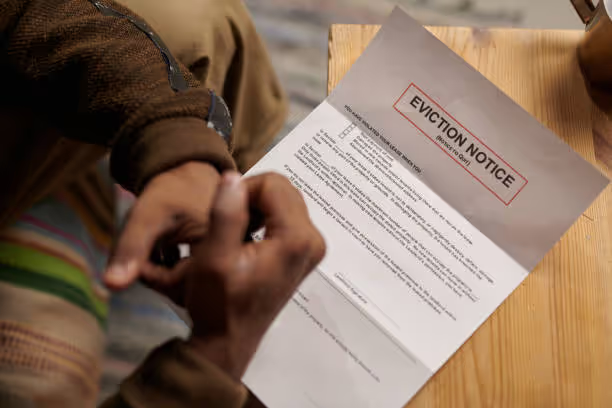
Evicting a tenant in Illinois means following Eviction action (formerly forcible entry and detainer) in Circuit Court exactly, start to finish. Skipping a step, whether it's the notice period, how the tenant is served, or the lockout procedure, can restart the clock or expose a management company to liability. This guide walks through each step with the statute or court rule behind it.
Everything below is sourced to Illinois's own statutes and court self-help pages. Specific deadlines and dollar figures do change, so confirm the current text before you rely on a date in a live case.
Overview Of The Eviction Process
Illinois residential eviction actions are governed by 735 ILCS 5, Article IX (Eviction) of the Code of Civil Procedure, and are filed in the Circuit Court of the county where the property is located. Separately, and distinctly from state law, the City of Chicago has its own Residential Landlord and Tenant Ordinance under the Municipal Code of Chicago, which supplements state law for units in Chicago; confirm the RLTO's current requirements directly with the City of Chicago before relying on them for Chicago units.
- Illinois eviction actions are governed by 735 ILCS 5, Article IX ("Eviction"), part of the Code of Civil Procedure. (735 ILCS 5/Art. IX)
- Standardized statewide Eviction Complaint, Eviction Summons, Eviction Answer/Defenses/Counterclaims, and Eviction Order forms are published as Illinois Supreme Court approved forms for use in all Illinois courts.
- Chicago maintains its own Residential Landlord and Tenant Ordinance under the Municipal Code of Chicago, separate from and supplementing the statewide Article IX eviction procedure for units within the city.
Lawful Grounds For Eviction
Section 9-102 lists the categories of cases in which a person may be evicted from real property.
- Forcible entry onto the premises is grounds for eviction. (735 ILCS 5/9-102(a)(1))
- Peaceable entry followed by unlawful withholding of possession is grounds for eviction. (735 ILCS 5/9-102(a)(2))
- A lessee or tenant holding over after termination of the lease term or tenancy is grounds for eviction. (735 ILCS 5/9-102(a)(4))
- A condominium or common-interest community unit owner failing to pay assessments, or a lessee breaching association rules, is grounds for eviction. (735 ILCS 5/9-102(a)(7))
Notice Requirements
Notice periods vary with the type of default and the tenancy term.
- For nonpayment of rent, the landlord must give written notice demanding payment, allowing not less than 5 days before terminating the lease and filing suit. (735 ILCS 5/9-209)
- For other lease defaults, it is not necessary to give more than 10 days' notice to quit before filing. (735 ILCS 5/9-210)
- To terminate a week-to-week tenancy, 7 days' written notice is required; for other tenancies of less than one year (such as month-to-month), 30 days' written notice is required. (735 ILCS 5/9-207)
- To terminate a year-to-year tenancy, 60 days' written notice is required, given within the four months preceding the last 60 days of the year. (735 ILCS 5/9-205)
Filing The Case
The action is commenced by a complaint stating the plaintiff's right to possession, after which the clerk issues a summons.
- The action is commenced by filing a complaint stating the plaintiff's right to possession and describing the premises; the clerk of the court then issues a summons. (735 ILCS 5/9-106(a))
- Minors may not be named as defendants in an eviction complaint; a complaint naming a minor is dismissed and the record sealed. (735 ILCS 5/9-106(b)-(d))
Serving The Tenant
The pre-suit demand/notice may be served by several statutory methods, including mail and posting.
- The pre-suit demand/notice may be served by delivering a copy to the tenant, leaving it with a person age 13 or older residing on the premises, or by certified or registered mail; if no one is in actual possession, by posting on the premises. (735 ILCS 5/9-211)
The Tenant's Response
A defendant may deny the claim and present a defense at trial; failure to appear allows an ex parte trial.
- A defendant may offer a general denial and present defense evidence at trial, limited to matters relevant to the right of possession. (735 ILCS 5/9-106(f))
- If a properly served defendant fails to appear, the trial may proceed ex parte, tried by the court without a jury. (735 ILCS 5/9-109)
Hearing And Judgment
Judgment for possession may include a stay of enforcement in specific circumstances such as purchase-contract defaults or condominium assessment cases.
- If the plaintiff prevails, judgment for possession and costs is entered; for certain purchase-contract defaults the court may stay enforcement up to 60 days. (735 ILCS 5/9-110)
- For condominium/common-interest cases, the court must stay enforcement of an eviction order for at least 60 days and may extend the stay up to 180 days. (735 ILCS 5/9-111)
The Writ And Lockout
An eviction order has a fixed shelf life for enforcement; confirm the sheriff's specific lockout notice procedure and property-disposal rules with the county sheriff's office.
- An eviction order expires 120 days after entry unless the plaintiff obtains a court extension, which requires showing the defendant has not cured the breach or reached a post-judgment agreement. (735 ILCS 5/9-117)
Eviction is the last step in a relationship that's already gone wrong. See our guide to Illinois property management laws and regulations for the licensing, disclosure, and trust-account rules that apply before it gets to this point.
Doing It By The Book
Self-help evictions, changing locks, removing doors, shutting off utilities, are illegal in every state and expose a management company to real liability regardless of how clear the nonpayment is. The court process exists because it's the only lawful way to remove a tenant, and skipping a step (a defective notice, bad service) is the single most common reason a case gets dismissed and restarted from day one.
This guide is a starting point for professional managers, not legal advice. For a specific case, a contested filing, or anything unusual, work with a Illinois attorney, and confirm the current text of any rule cited above with Circuit Court or the Illinois legislature.
Sources
Every fact above is drawn from one of the official sources below.
- 735 ILCS 5/Art. IX, Illinois General Assembly, Illinois Compiled Statutes, 735 ILCS 5, Article IX
Frequently asked questions
Illinois residential eviction actions are governed by 735 ILCS 5, Article IX (Eviction) of the Code of Civil Procedure, and are filed in the Circuit Court of the county where the property is located. Separately, the City of Chicago's Residential Landlord and Tenant Ordinance supplements state law for Chicago units; confirm its current requirements directly with the City of Chicago.
For nonpayment, the landlord must give written notice demanding payment and allow at least 5 days before terminating the lease and filing suit; for most other lease defaults, 10 days' notice to quit is sufficient before filing.
Managing rentals through an eviction?
An eviction lands on your books as well as your docket: the security deposit disposition, prorated or written-off rent, and the owner statement it all flows into. If you would rather have the accounting side handled while you handle the property, see how we keep trust accounts clean through move-outs, or find your state in our eviction process guides.