

Eviction Process In Arizona
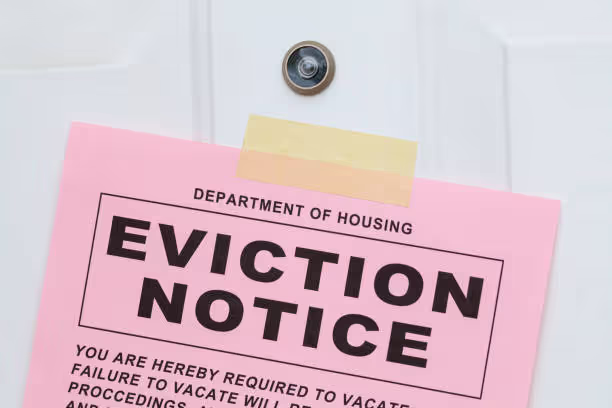
Evicting a tenant in Arizona means following Special detainer action (forcible detainer) in Justice Court (precinct where the rental property is located) exactly, start to finish. Skipping a step, whether it's the notice period, how the tenant is served, or the lockout procedure, can restart the clock or expose a management company to liability. This guide walks through each step with the statute or court rule behind it.
Everything below is sourced to Arizona's own statutes and court self-help pages. Specific deadlines and dollar figures do change, so confirm the current text before you rely on a date in a live case.
Overview Of The Eviction Process
Arizona residential evictions are special detainer actions filed in the Justice Court for the precinct where the property sits, governed by the Arizona Residential Landlord and Tenant Act, A.R.S. Title 33, Chapter 10 (§§ 33-1301 to 33-1381), and by the Arizona Rules of Procedure for Eviction Actions.
- Residential rental evictions (apartments, houses, mobile homes) are governed by Arizona Revised Statutes Title 33, sections 1301 through 1377; mobile home park spaces are governed separately by sections 1401 through 1501. (A.R.S. §§ 33-1301 to 33-1377)
- The Arizona Supreme Court has adopted the Arizona Rules of Procedure for Eviction Actions to govern how eviction cases are processed. (Ariz. R. P. Eviction Actions)
Lawful Grounds For Eviction
Confirmed grounds, directly from the statute text, are nonpayment of rent, health/safety noncompliance, and material breach of the lease, with certain material and irreparable breaches allowing termination without a cure period.
- If rent is unpaid when due and the tenant fails to pay within five days after written notice of nonpayment, the landlord may proceed with a special detainer action. (A.R.S. § 33-1368(B))
- For material noncompliance with the rental agreement generally, the landlord must give notice specifying the breach, with a 10-day period to remedy before termination. (A.R.S. § 33-1368(A))
- For noncompliance materially affecting health and safety, the cure period is shortened to 5 days. (A.R.S. § 33-1368(A) (health/safety provision))
- Material and irreparable breaches, including discharge of an illegal weapon, homicide, prostitution, criminal gang activity, controlled-substance offenses, and certain threatening or assaultive conduct, allow immediate termination without a cure opportunity. (A.R.S. § 33-1368)
Notice Requirements
Notice periods, as codified, are 5 days for nonpayment, 5 days for a health/safety cure, and 10 days for a general material-breach cure.
- Nonpayment notice: the tenant has 5 days after written notice to pay before the special detainer action may be filed. (A.R.S. § 33-1368(B))
- General material noncompliance notice: 10 days to remedy the breach. (A.R.S. § 33-1368(A))
- Health-and-safety noncompliance notice: 5 days to remedy the breach. (A.R.S. § 33-1368(A))
Filing The Case
The case is filed in the Justice Court precinct where the property is located; the court then issues a summons setting the hearing.
- An eviction action is filed in the Justice Court for the precinct where the rental property is located. (A.R.S. Title 33, Ch. 10)
- Once the complaint is filed, the court issues a summons setting the hearing at least 3 but no more than 6 days after the filing date. (A.R.S. § 33-1377)
The Tenant's Response
The tenant may file a written answer at no charge before the hearing, which is held 3-6 days after filing.
- Tenants may file an answer to the complaint at no charge any time before the hearing. (A.R.S. Title 33, Ch. 10)
Hearing And Judgment
The hearing is held 3-6 days after filing; if the landlord prevails, the tenant is generally given a further period to move out before a writ issues.
- The eviction hearing occurs 3 to 6 days after the complaint is filed. (A.R.S. § 33-1377)
The Writ And Lockout
The removal order is a Writ of Restitution, executed by a constable who may also change the locks; the writ, once issued, must be enforced.
- If the landlord prevails, the court's order is enforced through a Writ of Restitution, which the constable executes and cannot cancel or refuse to serve. (A.R.S. § 33-1368)
- After service of the Writ, a tenant who remains on, or unlawfully returns to, the property commits criminal trespass in the third degree. (A.R.S. § 33-1368(E), (F))
Prohibited Practices
Arizona bars self-help removal by requiring the formal special detainer process before any removal (A.R.S. § 33-1377); the underlying breach-and-termination rules are in A.R.S. § 33-1368.
- A.R.S. § 33-1368 requires a landlord to deliver written notice and then file a special detainer action under A.R.S. § 33-1377 to proceed with eviction; it does not itself authorize self-help removal. (A.R.S. § 33-1368)
Eviction is the last step in a relationship that's already gone wrong. See our guide to Arizona property management laws and regulations for the licensing, disclosure, and trust-account rules that apply before it gets to this point.
Doing It By The Book
Self-help evictions, changing locks, removing doors, shutting off utilities, are illegal in every state and expose a management company to real liability regardless of how clear the nonpayment is. The court process exists because it's the only lawful way to remove a tenant, and skipping a step (a defective notice, bad service) is the single most common reason a case gets dismissed and restarted from day one.
This guide is a starting point for professional managers, not legal advice. For a specific case, a contested filing, or anything unusual, work with a Arizona attorney, and confirm the current text of any rule cited above with Justice Court (precinct where the rental property is located) or the Arizona legislature.
Sources
Every fact above is drawn from one of the official sources below.
- A.R.S. §§ 33-1301 to 33-1377, Maricopa County Justice Courts (official Arizona county government site)
- A.R.S. § 33-1368(B), Arizona State Legislature, Arizona Revised Statutes (official)
Frequently asked questions
Arizona residential evictions are special detainer actions filed in the Justice Court for the precinct where the property sits, governed by the Arizona Residential Landlord and Tenant Act, A.R.S. Title 33, Chapter 10 (§§ 33-1301 to 33-1381), and by the Arizona Rules of Procedure for Eviction Actions.
Notice periods, as codified, are 5 days for nonpayment, 5 days for a health/safety cure, and 10 days for a general material-breach cure.
No. Arizona bars self-help removal by requiring the formal special detainer process before any removal (A.R.S. § 33-1377); the underlying breach-and-termination rules are in A.R.S. § 33-1368.
Managing rentals through an eviction?
An eviction lands on your books as well as your docket: the security deposit disposition, prorated or written-off rent, and the owner statement it all flows into. If you would rather have the accounting side handled while you handle the property, see how we keep trust accounts clean through move-outs, or find your state in our eviction process guides.